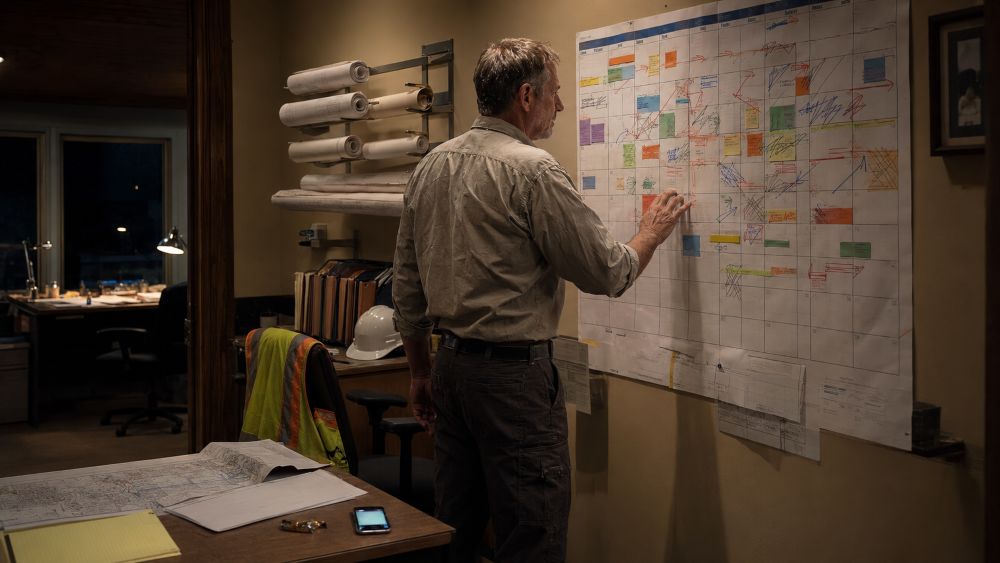
It is ten after six on a Thursday. Everybody else left an hour ago. The call from home came at five thirty, about who is picking your daughter up from practice, and you still have not called back. Lunch was a candy bar out of the desk drawer at two. Nobody has thought about dinner.
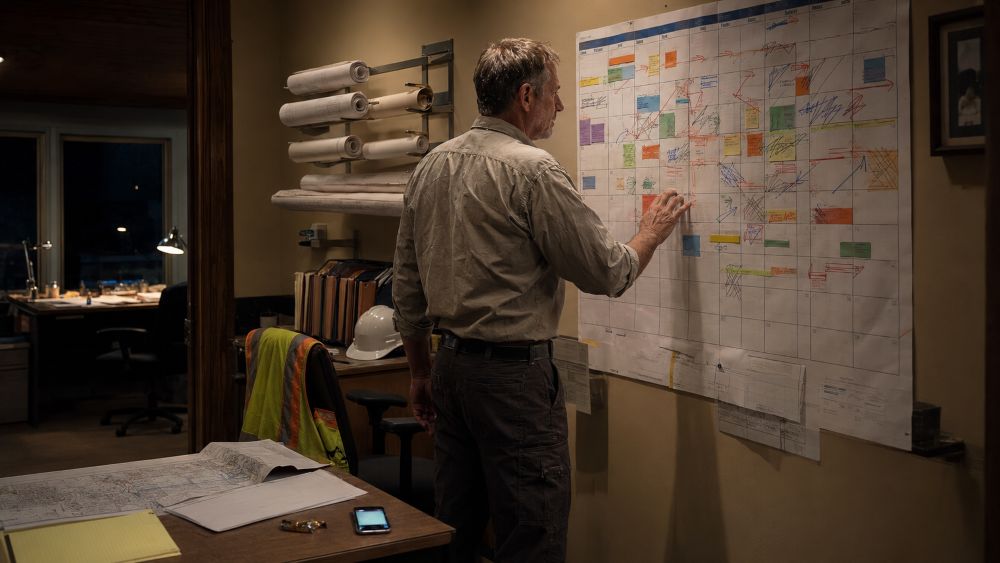
You are standing in front of the wall calendar doing what you do every Thursday night, which is figuring out tomorrow.
Two jobs are on the board for Friday. There is the ALTA on the north end that the title company has called about twice this week. There is a boundary staking you told a builder you would get done before the weekend.
You have one crew.
Your other party chief took Friday off. He told you about it three weeks ago and you said no problem, because three weeks ago it was not a problem. The robotic total station is going out on the ALTA. The backup instrument has been in the shop since Monday and nobody mentioned it because nobody needed it until right now.
So tomorrow is a wreck, and you found out at 6:10 on Thursday night.
None of that was a surprise. Every piece of it was known by somebody. It was just never in one place where you could see it all at once.
What planning by memory actually hides
Scheduling by memory does not fail loudly. That is what makes it expensive. It fails quietly, in five or six ordinary ways.
The week lives in one person's head. Usually the busiest person in the firm. The plan is complete for about four minutes at a time, right after you think it through, and then a call comes in and it is stale again.
Time off is remembered until it is not. Somebody told you in April about a week in July. It was true when they said it. It stayed true. You just were not looking at it when you promised the client.
Gear has a schedule too, and nobody keeps one. The instrument, the data collector, the ATV, the good truck. You can staff two crews on paper and still only be able to field one, because the equipment does not split.
Commitments get made one at a time. A client calls, you check your gut, you say yes. Every yes is reasonable on its own. Nobody is checking the yeses against each other.
Idle time never files a complaint. A crew that gets pulled off a job at eleven and has nothing lined up until one in the afternoon does not call to tell you. That is two hours of a billable crew you paid for and did not sell, and it leaves no trace.
Nobody sees the same board. The field crew knows their day. The project manager knows the deadlines. You know what you promised. Three partial pictures, none of them whole.
None of these are planning mistakes. The planning was fine. The problem is that a schedule you hold in your head cannot be checked by anybody else before it breaks.
The math out loud
Here is a conservative version. Assumptions stated plainly, and kept deliberately low.
The firm: six people. Two two-person field crews, one project manager, one in the office.
The value of a field crew day: $950. That is a two-person crew, on site, doing billable work for a normal day. Plenty of firms bill well above that. We are using a low number on purpose.
The office rate: $45 an hour, fully burdened, for the time your project manager spends rearranging a week that fell apart.
Two things to count.
Idle crew time. Not a whole crew sitting all day doing nothing. That would be obvious and you would fix it. This is the quiet version: a crew that finishes early with nothing staged behind it, a morning lost waiting on an instrument that is on the other truck, an afternoon where the only job available needed three people and there were two. Across both crews, call it one crew-day a month. Not one per crew. One, total, assembled out of half days and long lunches.
Twelve crew-days at $950 is $11,400 a year.
The scramble. The Thursday night rework. The Friday morning call telling a client you are pushing to Monday. The rescheduling that follows. Three hours a month of project manager time at $45 an hour is $135 a month, or $1,620 a year.
Total: just over $13,000 a year.
Here is what is not in that number. The job you pushed a week that the client quietly gave to somebody else next time. The overtime you paid when a crew doubled up to catch a deadline you should not have promised. The party chief who left partly because he was tired of finding out his week on Monday morning. None of that is reliably countable, so none of it is counted.
Which means if that thirteen thousand feels low to you, it is.
Why it keeps happening
Not because you are disorganized. Because the system you are using worked perfectly well and then quietly stopped.
At three people, planning in your head is the right call. You are on the jobs. You know where everybody is. Writing it down would take longer than remembering it, and it would be less accurate.
Somewhere around six or seven people that breaks. Not all at once. There is no day where memory stops working. The moving pieces just keep multiplying until there are more of them than any one person can hold, and you start finding out about problems on Thursday night instead of the Friday before.
The firms that run into this are almost always the ones that grew. The habit that got you here is the habit that is costing you now.
What actually fixes it
The fix is not a more complicated plan. It is a plan that exists somewhere other than your head.
You want to be able to look at the next two or three weeks and see, in one place, who is working, who is off, what gear is committed, and what is still open. Not tomorrow. The next few weeks. Far enough out that a client asking for Thursday gets an honest answer instead of an optimistic one.
You want the crews looking at the same thing you are looking at, so a change you make at four in the afternoon reaches the truck before it leaves the yard in the morning.
You want whoever books the work to see capacity before promising it. Almost nobody overpromises on purpose. They do it because they cannot see the board.
That is the whole job of survey crew scheduling software: put the week in front of everybody at the same time, including the equipment, so the plan survives contact with a busy Tuesday.
The Thursday night test
Go back to six ten on Thursday.
The question was never whether you can plan the week. You have been doing it for years and mostly getting it right. The question is whether you should still be the place the whole schedule is stored.
Every promise made without a clear view of capacity is a promise you might have to walk back later, to a client who will remember it longer than you will.
You do not have to be more organized. You just need the week to live somewhere you can look at it.
Seven days, no credit card.
See whether it fits your firm.
Set up your first project in the time it takes to read this article.
Start Free Trial - No Credit Card