
The party chief says the crew was on the Henderson boundary for nine hours. The timesheet that lands on the office manager's desk says seven. Nobody is lying. Both of them are certain. And every two weeks, some version of this same conversation happens again.
If you own a survey firm, you know this one in your bones. It is not the argument that hurts. It is the fact that there is no way to settle it. The crew remembers a long, hard day with a monument that would not turn up and a landowner who wanted to talk. The office remembers what got written down three days later, from memory, in a truck. Two honest accounts of the same day, and they do not match.
The gap is not about who is right
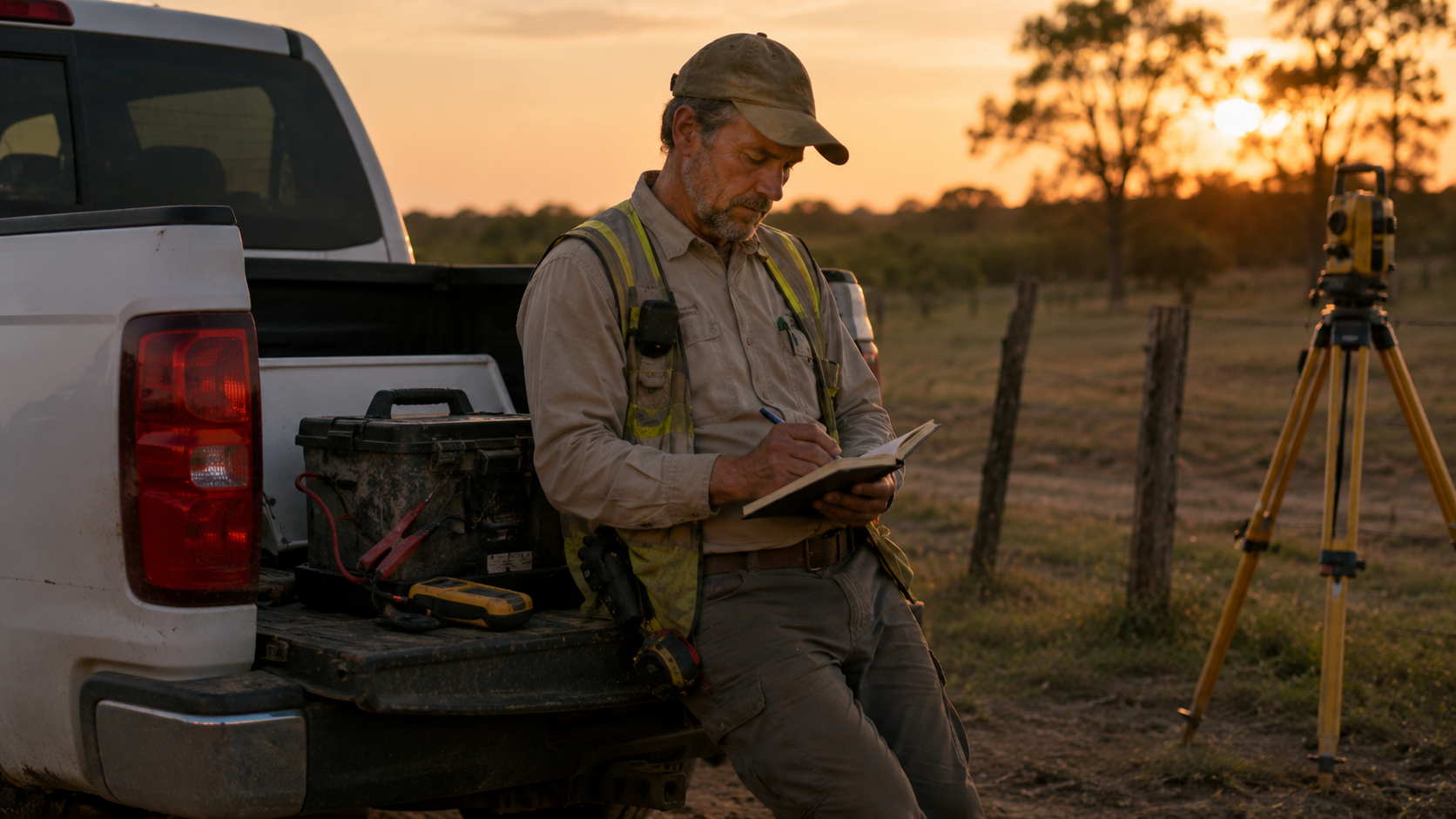
Start with the thing most owners get wrong about this. They treat it as a truthfulness problem. It almost never is.
Field crews are not padding hours, and the office is not shorting them out of malice. The gap opens up because the two sides are recording the same day from two different places, at two different times, using two different memories. The party chief lived the day minute by minute. The office is reconstructing it from a number scribbled at the end of the week.
A few things widen that gap on their own:
Memory decays fast. Ask anyone to account for Tuesday on the following Monday and you will get a rounded, softened version. The half hour waiting for the crew truck to get a jump, the twenty minutes relocating a corner that was buried under new fill, the drive back to the office to swap a data collector. Those minutes were real and billable. By Friday they have blurred into "about seven hours, I think."
There is no shared record. The crew has one account, the office has another, and there is nothing sitting between them that both sides trust. When two people disagree and there is no neutral third thing to point at, the disagreement has nowhere to go. It just sits there and sours.
The incentives point in opposite directions without anyone meaning them to. The crew wants full credit for a hard day. The office wants clean numbers that reconcile against a project budget. Neither goal is wrong. But when the only bridge between them is a handwritten total from three days ago, they collide.
The cost that never shows up as a dollar figure

Our first article on this walked through what unbilled field hours actually cost a firm across a year, and the number is bigger than most owners expect. This is not that article. The disputed-hours problem does its damage somewhere the annual math cannot reach.
It costs you crew morale. A party chief who feels shorted on hours twice a month stops caring about getting the number right the third time. Why fight for the accurate figure when it gets trimmed anyway? So they round down to avoid the argument, and now you are underbilling on top of everything else.
It costs you office patience. Whoever runs payroll and invoicing is stuck refereeing a fight they cannot win, holding a timesheet they have no way to verify against a crew account they have no way to check. That is not a fun job, and good office managers get tired of it.
And it costs you the thing under both of those, which is trust. Every disputed timesheet is a small deposit into a bad account. The crew starts to feel the office does not believe them. The office starts to feel the crew inflates. Neither belief is fair, but both grow, and a firm where the field and the office quietly distrust each other is a harder firm to run than one where they do not.
None of that shows up on a P&L. All of it shows up in how the place feels to work in.
Why it keeps happening
Here is the honest answer, and it is not a satisfying one if you are hoping to blame someone. It keeps happening because your process asks two people to remember the same day and then acts surprised when their memories differ.
That is the whole mechanism. There is no single source of truth about what happened in the field, so the field and the office each build their own, and their own will never perfectly agree. You can hire more careful people. You can lecture about writing hours down sooner. It helps a little and then drifts right back, because you have not changed the thing causing it. You are still running two competing records of one day and hoping they land in the same place.
They will not. Not because anyone is careless. Because that is what happens when the record is made from memory after the fact instead of captured while the day is happening.
What actually fixes it
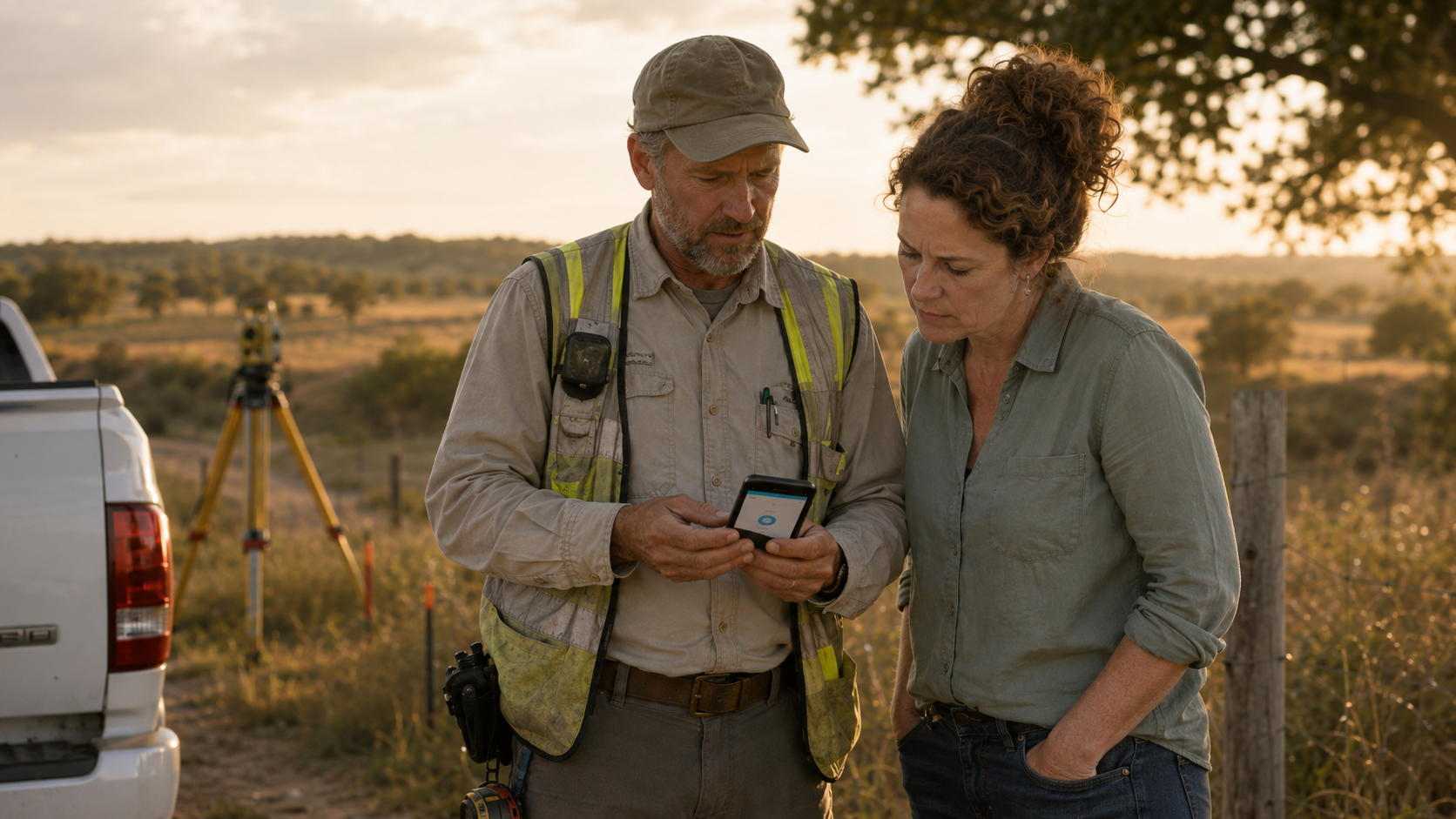
The fix is not more discipline. It is removing the second record entirely.
When the crew captures time in the field, as the day happens, on the phone already in the party chief's pocket, there is nothing to reconstruct later. The hours on the Henderson boundary are logged at the boundary, tied to that project, at the time they are worked. When the office opens the timesheet, it is not the office's version against the crew's version. It is the one record both sides were looking at all along.
That is the quiet part that changes the whole dynamic. The argument does not get won. It stops existing. There is no gap between what the crew remembers and what the office sees, because they are seeing the same thing, and it was written down when it was still fresh instead of dredged up on Friday.
This is exactly what time tracking for survey crews inside Kudurru Stone is built to do. Time gets captured in the field, attached to the right project, visible to the office the moment it is entered. One record. Both sides. No reconstruction, no refereeing, no two-weeks-later standoff over a day nobody can prove.
We are in this with you on the part that matters here, which is that this was never really about hours. It was about two people who work for the same firm slowly losing faith in each other over a problem the process created. Fix the record and you fix that too.
The bottom line
The field and the office will never perfectly agree on hours as long as they are each remembering the day on their own. That is not a people problem you can manage your way out of. It is a structure problem, and it has a structural fix: one shared record, captured while the work is happening, that both sides trust because both sides can see it.
Get that in place and the twice-a-month argument goes quiet. Not because anyone won it. Because there is finally nothing left to argue about.
Try it on your own crew. Start a 7-day free trial of Kudurru Stone. No credit card, no sales call. Log a real field day, on a real project, and see the office and the field looking at the same hours for once.
Prefer to be walked through it first? Book a demo and we will show you how crews capture time in the field.
Seven days, no credit card.
See whether it fits your firm.
Set up your first project in the time it takes to read this article.
Start Free Trial - No Credit Card